

Visit by Rohit
Super nice to have lab undergrad alum Rohit here at KAIST! … and to get…

건강한 종강 파티 (+태완이 환영)
심신의 건강한 단련을 위한 박수현 교수님 연구실과의 공동 종강 파티. 연구참여하기로한 태완 학생 반갑습니다! The…

세포실과 동물실 새단장
함께 청소하고 디자인해준 강태욱 박사 고맙습니다! feat. 코너링이 일품인 임상호 교수님.

조건식 셀위버스 대표님 방문
멋진 세미나 감사합니다! [세미나 일정 안내] – 일시: 2026년 6월 4일(목) 16시 – 장소: KAIST…

한양대학교 오요한 교수님 방문
줄기세포를 퇴행성 뇌질환 연구에 접목한 멋진 세미나 감사합니다! [세미나 일정 안내] 1. 일시 : 2026.04.16(목) 오후 16:00 2. 장소 : 기초융합과학동(E7),…

Soraia’s paper was published in Nature Communications!
Super congrats to Soraia, it was such a pleasure to work with you! Our paper…
A Broader Perspective on Intelligence
Intelligence means many things for each organism on Earth. For plants waiting to flower, it can mean knowing when the nights and days are just the right length. For humanity, it can mean how well we can learn, interact, reason, and contribute to our society. As a cornerstone of adaptation and survival, every species has evolved sophisticated cellular and neural circuits to drive intelligent behavior.
At the very heart of these processes are molecules that interface information and biophysical events in our cells. From ion channels that trigger electric signals to synaptic molecules that react to learning experiences, our brain relies on key molecules that are essential for our intelligence. Mutations in essential intelligence genes can lead to severe intellectual disability, often accompanied by autism and epilepsy.
Our Mission: Deciphering the Molecular Code of Intelligence
At Ingie Hong’s Quantitative Intelligence Lab, we are dedicated to unraveling the precise roles of these crucial “intelligence molecules.” Our research aims to understand how they contribute to the complex computations that occur within the brain. To achieve this, we employ a multidisciplinary approach that combines cutting-edge technology with rigorous scientific inquiry.
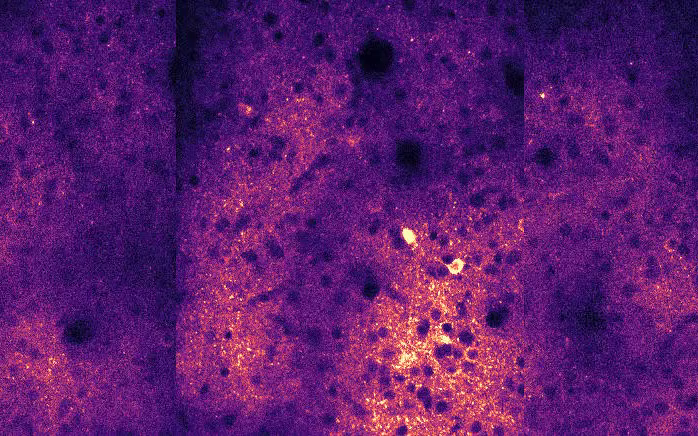
We utilize advanced techniques such as multi-photon in vivo imaging to visualize the activity of individual neurons and neural circuits deep within the living brain with high resolution. This allows us to observe how information is processed in real-time. Complementing this is large-scale electrophysiology, which enables us to record the electrical activity of hundreds to thousands of neurons simultaneously. By studying animal models of intellectual disability, we can investigate how the “neural code” is disrupted at a circuit level.
To probe the molecular underpinnings of these computational events, we are actively involved in the development of novel biosensors. These sophisticated tools allow us to monitor the dynamics of specific neurotransmitters and neuromodulators with exceptional precision, providing a deeper understanding of the chemical communication that underlies brain function. Furthermore, we leverage next-generation molecular biological tools to manipulate these critical events at the molecular level, allowing us to test causal relationships between specific molecules and cognitive processes.
Bridging Basic Science and Therapeutic Innovation
A core tenet of our lab is the translation of fundamental discoveries into tangible therapeutic strategies. We are at the forefront of developing and implementing advanced CNS-targeted therapeutics. Our efforts in this area include the use of antisense oligonucleotides (ASOs), which are molecules designed to correct the genetic expression and splicing that lead to neurological disorders. We are also exploring the potential of lipid nanoparticles (LNPs) and adeno-associated viruses (AAVs) as promising vectors for gene therapy, with the goal of correcting the root cause of genetic intellectual disabilities.
A Call for Collaboration
The complexity of the brain and the challenges of neurological disorders demand a collaborative spirit. We warmly invite patient families, molecular tool-makers, computational modeling experts, neurophysiologists, clinicians, and other dedicated individuals to join us in our mission. We believe that by combining our diverse expertise, we can accelerate the pace of discovery and make meaningful strides towards new treatments. Aspiring students, technicians, and postdoctoral fellows who are passionate about unraveling the mysteries of intelligence are also strongly encouraged to get in touch and explore opportunities to contribute to our work.