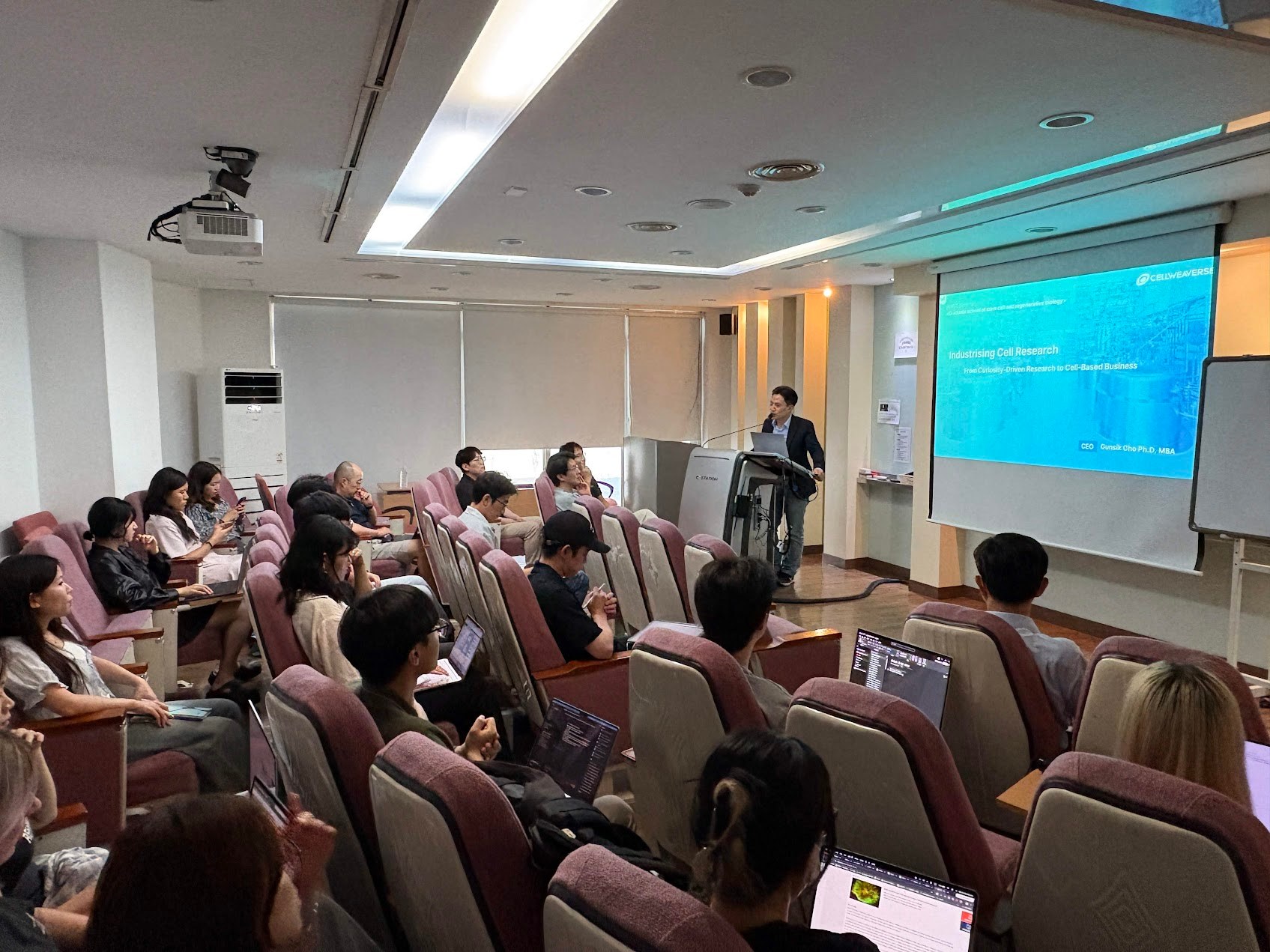
멋진 세미나 감사합니다!
[세미나 일정 안내]
– 일시: 2026년 6월 4일(목) 16시
– 장소: KAIST 본원 E7 기초융합과학동 2113호 (대전 유성구 대학로 291, E7 2113호)
– 연사: 조건식 대표 / 셀위버스
– 연제: Industrializing Cell Research
– 진행언어: 영어


QI-Lab
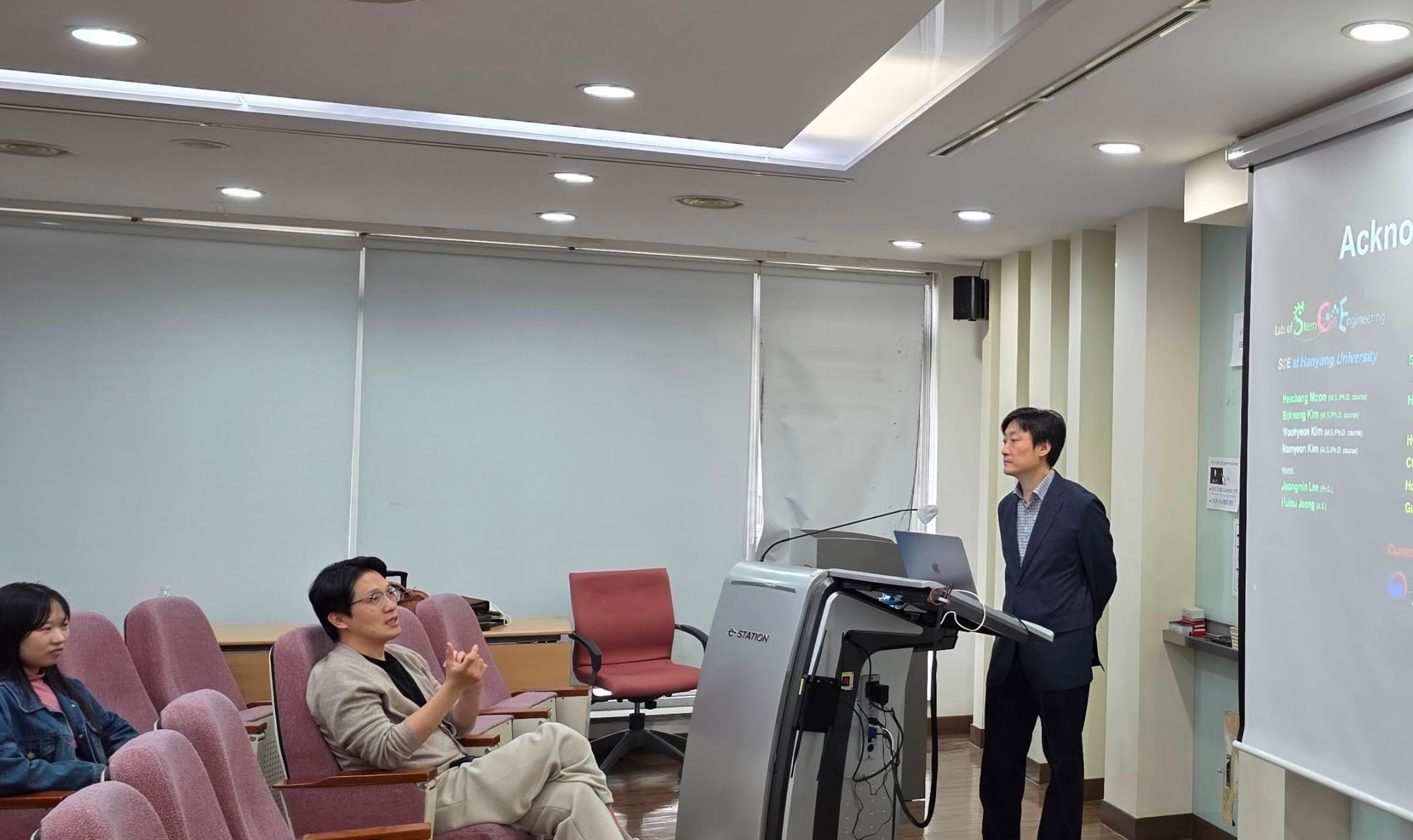
멋진 세미나 감사합니다!
[세미나 일정 안내]
– 일시: 2026년 6월 4일(목) 16시
– 장소: KAIST 본원 E7 기초융합과학동 2113호 (대전 유성구 대학로 291, E7 2113호)
– 연사: 조건식 대표 / 셀위버스
– 연제: Industrializing Cell Research
– 진행언어: 영어
줄기세포를 퇴행성 뇌질환 연구에 접목한 멋진 세미나 감사합니다!
[세미나 일정 안내]
1. 일시 : 2026.04.16(목) 오후 16:00
2. 장소 : 기초융합과학동(E7), 2113호
3. 연사 : 오요한 교수 / 한양대학교
4. 연제 : Exploring the potential of hPSC-derived neurons for neurodegenerative disease modeling
5. 문의 : 생명과학과 홍인기 교수 (T.2624)
6. 첨부: CV, Abstract
* 본 세미나는 한국어로 진행됩니다.

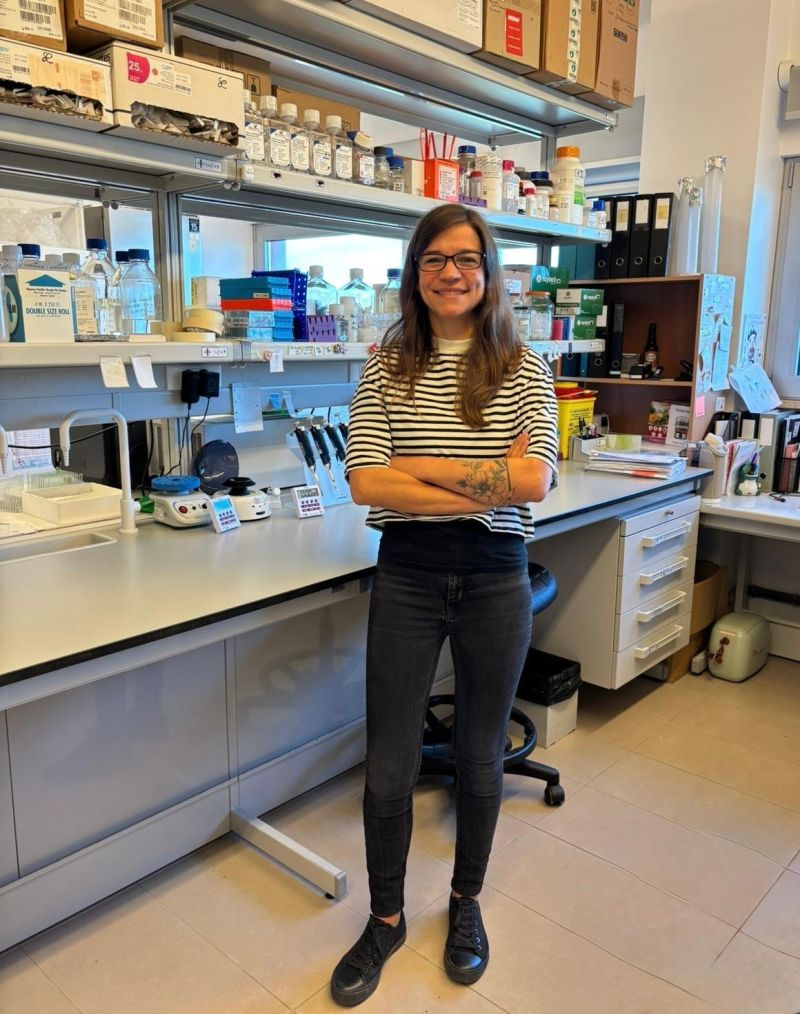
Super congrats to Soraia, it was such a pleasure to work with you! Our paper resolves important an issue on whether Syngap1 has a prominent non-synaptic role in cortical development.

Well-trained scientists and their passion are important rate-limiting assets of our society. Given how many important scientific questions there are to ask, reducing failure and ensuring each of you succeeds is important even beyond your personal career.
Share your own advice below!

There are a lot of reasons why a research project can fail, and some of them are avoidable. For biological research that focuses on genes, assessing ‘which cell’ and ‘how essential’ is critical. A brilliant hypothesis about a gene’s function can crumble if the gene isn’t expressed in the right tissue or if it’s so vital that any perturbation is lethal. Fortunately, a wealth of publicly available data can help you de-risk your project from the outset. This post will walk you through a powerful trifecta of online resources—GTEx, Allen Brain Atlas, and gnomAD—to constrain your research scope and build a more robust hypothesis.
Before you even think about complex experiments, a fundamental question needs an answer: Is your gene of interest expressed in the tissue you plan to study? The Genotype-Tissue Expression (GTEx) portal is an invaluable resource for exploring gene expression across a wide array of human tissues.
The GTEx project has collected data from a multitude of post-mortem donors, providing a comprehensive look at the normal expression landscape. You can visualize both bulk RNA-sequencing data, which gives an average expression level for a tissue, and single-cell RNA-sequencing data for a more granular view.
A Practical Workflow for GTEx:

By starting with GTEx, you can quickly confirm if your gene is present in the right biological context, preventing you from pursuing a project in a system where your gene is silent.
If your research focuses on neuroscience, the Allen Brain Atlas is an unparalleled resource. It provides a detailed, genome-wide map of gene expression in both the mouse and human brain. This allows you to investigate your gene’s expression with high spatial resolution.
Navigating the Allen Brain Atlas for Your Research:

The Allen Brain Atlas helps you refine your hypothesis by pinpointing the specific neural circuits and cell populations where your gene might be active, adding a crucial layer of spatial detail to your research question.
Now that you know where your gene is expressed, you need to understand how important it is for basic biological function. The Genome Aggregation Database (gnomAD) is a massive collection of exome and genome sequencing data from a diverse range of individuals. A key metric derived from this data is the probability of being Loss-of-Function Intolerant (pLI) score.
The pLI score estimates how tolerant a gene is to mutations that would likely abolish its function. The score ranges from 0 to 1:
How to Use gnomAD pLI to Inform Your Research:

While gnomAD has more recently introduced the observed/expected upper bound fraction (LOEUF) score as a more continuous measure of constraint, the pLI score remains a widely used and intuitive metric for a first-pass assessment of gene essentiality.
By integrating information from these three powerful resources, you can build a much more robust and defensible research plan.
Imagine you have a hypothesis that Gene X is involved in memory formation in a specific type of neuron in the hippocampus.
By taking these preparatory steps, you’ve significantly de-risked your project. You’ve confirmed your gene is in the right place at the right time and have anticipated potential challenges related to its essentiality. This proactive approach allows you to refine your hypothesis and design more targeted and meaningful experiments, ultimately steering your research away from avoidable dead ends and towards success.